Right now there are major wildfires burning across France, Spain, and Italy. I have spent more than a decade photographing California’s biggest fires for AFP, over 100 of them, and watching the coverage out of Europe this week feels like looking at photographs I have already taken.
Why Europe’s Fires Look So Familiar
The scenes coming out of Europe follow a pattern I know frame by frame. Fires moving faster than the models predicted. Crews making stands at the edges of towns. Residents standing in the road, watching a column of smoke build over places that were never supposed to burn like this.
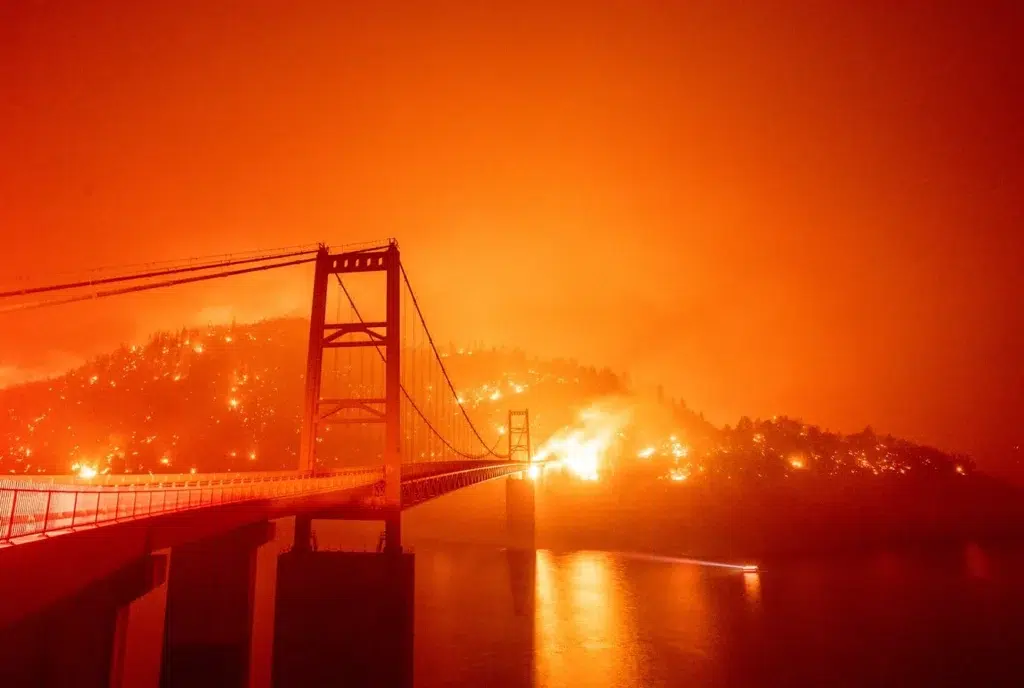
California went through this realization years ago. The Camp Fire in 2018 erased a town of 26,000 people in a morning. The Dixie Fire in 2021 burned for three months and took the town of Greenville with it. In January 2025 I photographed urban neighborhoods in Los Angeles burning in the middle of winter. Every one of those fires broke an assumption about what fire could do. Europe is having its assumptions broken now.
What a Decade Inside the Fire Line Teaches You
I work in full firefighter Nomex with a fire shelter and a chainsaw in my truck, and I am self-contained for up to three days on a fire. The thing that scares me most is not the flames. It is the burned trees that keep smoldering at the roots and fall without warning, sometimes weeks after the front has passed. Firefighters call them widowmakers.
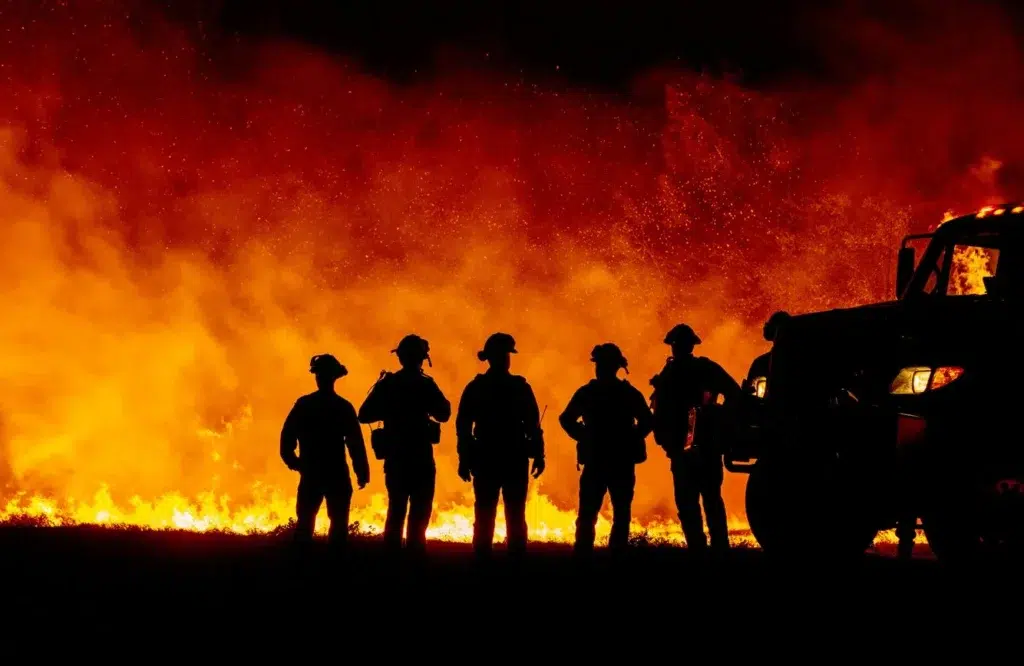
The other thing you learn is that the story is no longer about one fire and one town. Smoke from these events crosses oceans. Insurance markets move. Building codes change. Nowhere is fully protected anymore, and that is exactly why the images matter. A photograph of a firefighter silhouetted against a wall of flame communicates the scale of this change faster than any chart.
Why This Is a Global Story Now
For years, California was the cautionary tale. Now the same fire behavior is showing up in the Mediterranean, in Canada, in Chile, in Greece. The fire seasons are longer, the fuels are drier, and the overlap between wildland and neighborhoods keeps growing. The photographers covering France, Spain, and Italy this week are documenting the same new fire age I have been photographing in California since 2012, and their images will do the same work: making an abstract crisis impossible to look away from.
If You Are Covering This Story
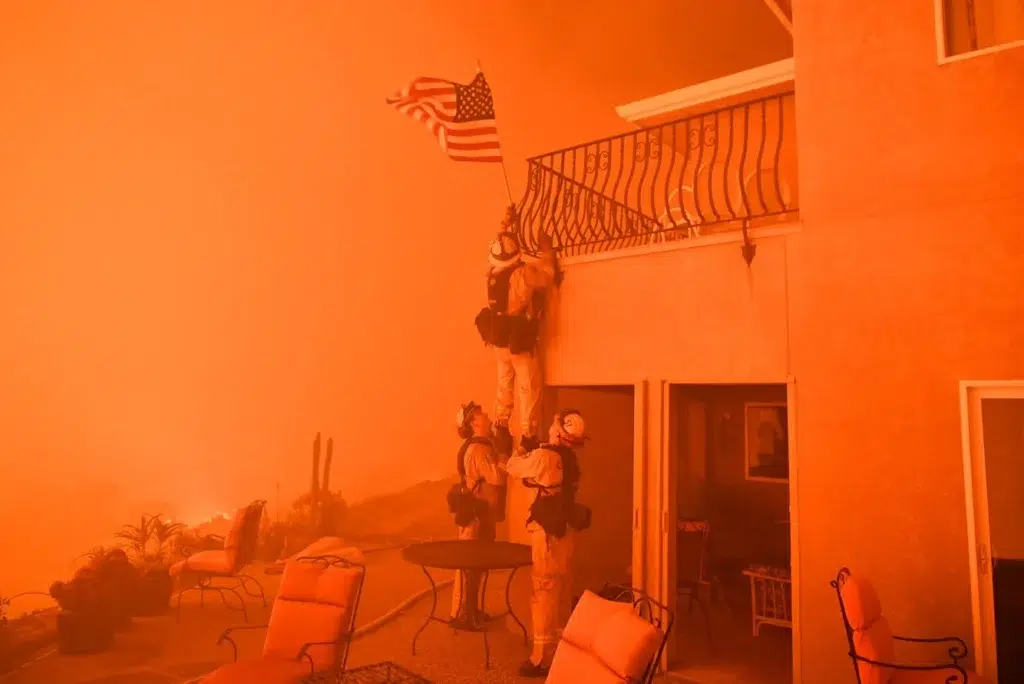
Newsrooms, educators, and documentary teams covering the European fires often need California imagery for context: what a decade of escalating fire looks like, from the first megafires to urban conflagration. My published wildfire frames are distributed by AFP and Getty Images, and I keep the copyright on comparable outtakes from the same fires, which I license directly at rates about 20 percent below the major agencies. You can see the work in my California wildfire gallery and get an instant estimate on the licensing page.
I also speak about this work: what it is like to document the climate crisis from inside the fire line, and what these images do to the people who see them. If your conference or organization is talking about wildfire risk this year, get in touch.