Edelson

Blog

Your blog category

The diamond ring effect during a total solar eclipse, photographed by Josh Edelson
Blog

Chasing Totality: Photographing Two Total Solar Eclipses

There is a total solar eclipse crossing Europe on August 12, 2026. I am not chasing this one, but I have chased two, and I still think about them constantly. If you have never stood inside totality, here is a little of what the people in Spain and Iceland are about to experience. The August 12, 2026 total solar eclipse: the band of totality and the wider partial eclipse region. Graphic: European Space Agency (ESA), CC BY-SA 3.0 IGO. I cried during my first total solar eclipse. I did not expect that. It was 2017. My wife and I drove two days to get to Weiser, Idaho, slept in the back of my 4Runner, and set up in a spot I had scouted for the clearest view. When totality hit, something came over me that I still can not fully explain. I think it was feeling connected to every human who ever stood under one of these with no idea what was happening. Ancient people must have thought it was the end of the world, or the gods. Terror, confusion, awe. Standing there, I felt all of it. Here is what the photos can not show you. The second totality hits, the temperature drops about twenty degrees almost instantly. The sky goes about 95 percent dark, like a moonless night in the middle of the day. Birds and animals get fooled and start making their night sounds. And you take off your glasses and look up with your naked eyes at a black hole in the sky where the sun used to be. Then there is the light. At a normal sunset you get orange and pink on one horizon and deep blue on the other, because the sun only sets on one side. During totality you are standing inside the moon shadow, so you get 360 degrees of sunset all the way around you. I was not ready for that. I almost blew the whole thing. You need a solar filter over your lens for the entire partial phase, and you only take it off for the couple of minutes of totality. I forgot to bring mine. So I grabbed a handful of the paper eclipse glasses people were using to watch, cut out the lenses, and taped them together into a filter over my lens. It actually worked. That taped-up mess is above. We only had about three minutes, so I moved fast. I had a second camera on a tripod and a flash on each side of us, and my wife and I fired off a selfie of the two of us during totality, holding the flashes. One of my favorite frames I have ever made, and it almost did not happen. The second chase was 2024. I was willing to go anywhere in the country and ended up in Bloomington, Indiana, purely because it had the lowest odds of cloud cover. Long drive, absolutely worth it. I shot both eclipses on a day rate for AFP, and the composites came out better than I hoped. A composite from the 2024 eclipse, the partial phases sweeping down into the diamond ring at totality. One thing I learned the second time around: if you zoom way in during totality and underexpose, you can actually capture the solar flares whipping off the sun around the edge of the moon. Seeing that come up on the back of the camera is insane. The diamond ring at the edge of totality, with pink solar prominences flaring off the sun. The work from these chases ran on the BBC, Yahoo, and Sky at Night Magazine, went out worldwide on the wire through AFP and Getty, and one of the composites was featured in Forbes ahead of this August’s total solar eclipse. Most of my sun and moon work is quieter than this. I will spend hours, sometimes days, plotting exactly where to stand so the moon lines up behind a ridge, a bridge, or a person, anything that gives it scale. Usually I drive home with a single frame. Sometimes none. And sometimes something I never planned shows up, a bird, a cloud, a passing plane, and that turns out to be the shot. None of it is on assignment. It is just me leaning into something for the love of it. The eclipses are the loudest version of that. Days of planning for three minutes you will never forget. Worth every mile. See the full set in my Sun & Moon gallery.
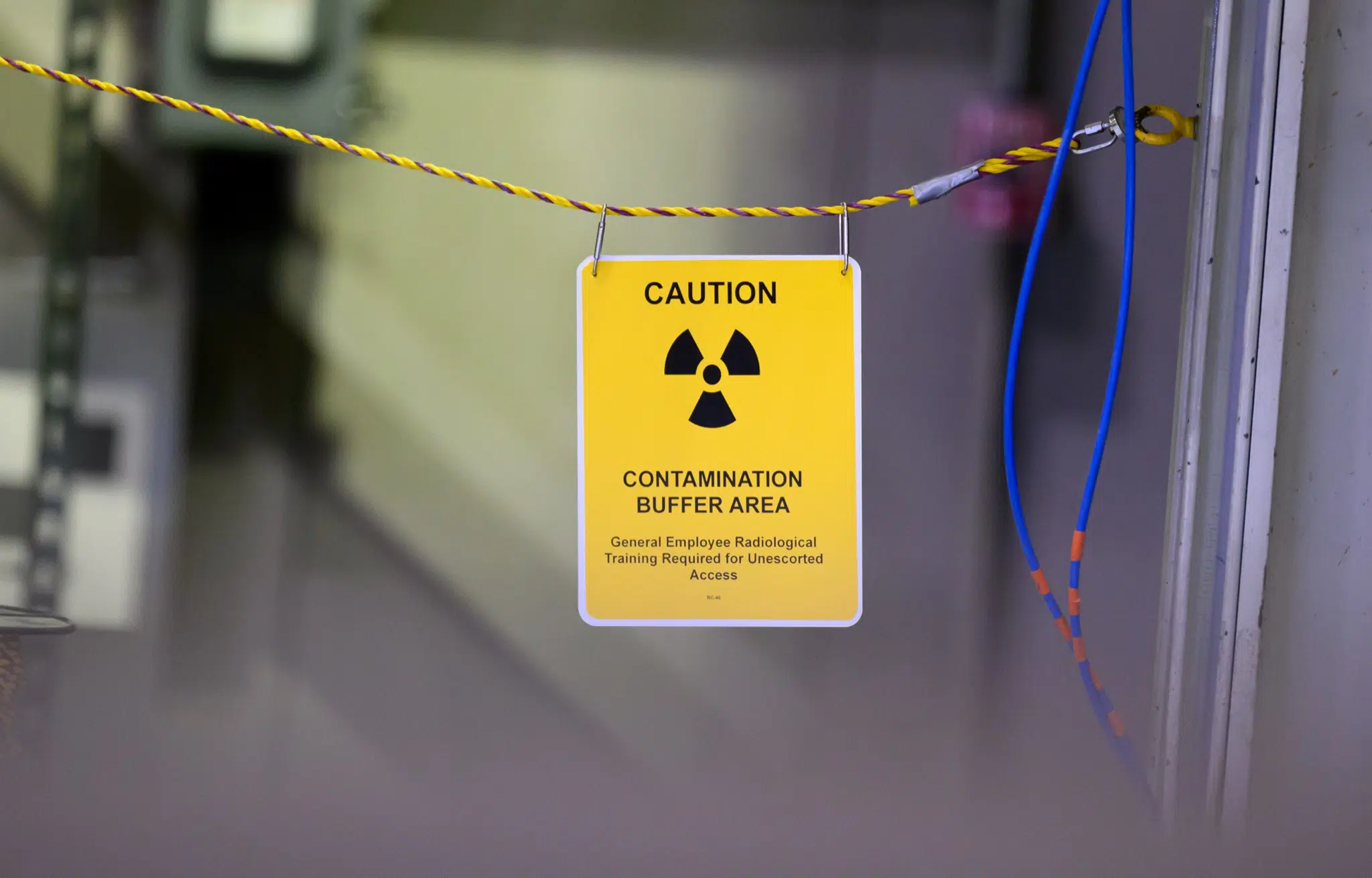
A sign warns of radioactive contamination at Idaho National Laboratory
Blog

Into the Nuclear Desert: Photographing America’s Reactor Race for AFP

They put us on a bus and drove us into the desert I have shot for AFP and Getty for more than fifteen years, and the assignments have taken me to some strange and guarded places. Few have felt like this one. There was no driving in on your own. They loaded us onto a bus and pointed it at the empty high desert west of Idaho Falls, and the deeper we pushed into the sagebrush, the more the world changed. The signs stopped marking miles and started warning about radiation. Placards flagged radioactive contamination. Armed guards watched the road. Out here, behind the fences and the warnings, a handful of startups are building the future of American nuclear power, far from any city or spotlight. A sign warns of radioactive contamination during the tour, June 25, 2026. This is the grounds of Idaho National Laboratory, the federal site that fired up the world’s first electricity-producing reactor in 1951 and has built more than fifty prototypes since. AFP sent me to document the moment the next generation stopped being a slide deck and started going critical for real. A general view of the Materials and Fuels Complex at Idaho National Laboratory, June 25, 2026. What is actually out there The reactors are small modular reactors, or SMRs, and microreactors. Forget the looming cooling towers. These are compact, almost unassuming. One was small enough that the company simply hitched it to a pickup truck and towed it across the desert to the site. That image stuck with me longer than any spec sheet could: the future of the grid, rolling down a dirt road behind a truck. Secretary Wright and officials tour Idaho National Laboratory, June 25, 2026. Ten companies were handpicked for the Department of Energy’s Nuclear Reactor Pilot Program, launched in 2025 and tied to a presidential executive order. The lab lends them roughly eighty years of hard-won experience. And there is a clock on it. The race has a deadline: push reactors to criticality around July 4, 2026, the country’s 250th birthday. Criticality is the word that matters out here. It is the instant a reactor begins to sustain its own nuclear chain reaction. It is a genuine threshold, and it is not the same as powering your house. These designs still need clearance from federal regulators, the prototypes run under a special government waiver, and plenty of analysts doubt they can ever beat wind and solar on cost. I tried to keep all of that in the frame, the promise and the asterisk both. A sign indicating reactor status during the tour, June 25, 2026. And yet the milestones kept landing. Antares became the first company to fire up a new-design American reactor in nearly fifty years, reaching criticality on June 4. Valar Atomics went critical on June 18 with a unit the size of a minivan. Aalo Atomics built its facility here in thirty-six days and was lined up to go next, right before the July 4 target. Nuclear fuel is seen at Aalo Atomics during the tour, June 25, 2026. Then the Secretary climbed on top of a reactor US Secretary of Energy Chris Wright toured the sites on June 25, and he did not hedge. “We’ll have hundreds by the end of the decade,” he told the room. “Our aggressive goal is that we will have some of these reactors producing electricity for beneficial use next year.” US Secretary of Energy Chris Wright speaks about nuclear energy on stage, June 25, 2026. Then came the frame I cannot stop thinking about. Wright climbed up and stood on top of a nuclear reactor at the Aalo Atomics facility. A sitting cabinet secretary, boots on a reactor, in the middle of a guarded desert. You do not get many chances at a picture like that. Moments earlier he had signed an authorization, on the spot, clearing Aalo to start the thing up. I worked the rest of it hard: nuclear fuel up close, the founders walking him through their machines, the bare concrete pads and empty domes waiting for the next reactors to drop in. US Secretary of Energy Chris Wright climbs atop a nuclear reactor at Aalo Atomics during a tour of Idaho National Laboratory, June 25, 2026. The founders matched his nerve. “This is the first real moment in this new nuclear renaissance,” Antares CEO Jordan Bramble told me. Aalo’s president and CTO Yasir Arafat made the case for going small: “The whole plant can get simpler. We don’t need several feet of concrete and steel containment.” Radiant’s president and COO Tori Shivanandan talked about the regulators with something close to respect: “They hold the line, and we want them to, because ultimately, if we don’t make safe products, we’ll never sell reactors.” Why it felt like more than a photo op American nuclear stalled for a generation after Three Mile Island and Chernobyl. It is roaring back now under both Biden and Trump, driven by the war in Ukraine and the staggering power demand coming from AI and data centers. Radiant and Antares are aiming their first units at US military bases. Aalo is chasing data centers. China is the only other country running an SMR today, and Wright frames the American version as a weapon of trade: “This will be a massive American export a decade from now.” Armed guards look on at Idaho National Laboratory, June 25, 2026. Whether the costs and the regulators cooperate is still an open question. But standing in that desert, watching the Secretary of Energy balance on top of a working reactor he had just authorized, ringed by radiation signs and armed guards, it did not feel theoretical. It felt like the opening scene of whatever comes next. You can read the AFP story here on France 24, and see the full take on the Getty gallery. AFP ran multiple stories off this shoot. I shoot corporate and editorial assignments nationwide. If you have a

Blog

What to Wear for Corporate Headshots: A San Francisco Photographer’s Guide

I shoot corporate headshots for teams across San Francisco and the Bay Area, and the question I get more than any other, usually the day before a shoot, is simple: what should I wear? It matters more than people think. The right outfit makes you look sharp and current. The wrong one dates the photo or pulls attention away from your face. Here is exactly what I tell my clients. Start with solid colors Solid colors almost always beat patterns. Busy stripes, small checks, and tight patterns can create a distracting shimmer on camera and pull the eye away from where it should be, which is your face. If you love a pattern, keep it large and subtle rather than tight and busy. The colors that photograph best Solid, bright colors are what I recommend: cobalt and royal blue, emerald green, red, teal, and rich jewel tones. Bright, saturated color pops on camera, separates you cleanly from the background, and reads confident and current. Navy, charcoal, and black still work if that is your style, but do not default to them just because they feel safe. A wall of identical dark blazers is exactly what makes a team page look dated. Avoid pure white, which blows out under studio light, and washed-out pastels, which can leave you looking faded. The one thing worth actually thinking about is your own coloring: pick a color that contrasts with your skin tone and hair so you stand out from the background instead of blending into it. Bring two or three outfits, not ten You do not need a suitcase. Two strong looks beat a pile of maybes, and fewer options keeps shoot day calm and quick. I usually suggest one more formal look and one that reflects how you actually show up at work, plus a backup top in case something wrinkles. Long or three-quarter sleeves almost always look more polished than short sleeves. What to avoid Logos and slogans. They date the photo and compete with your face. Busy patterns and tight stripes. Bright neon or pure white as your main color. White can blow out under lighting. Chunky or shiny jewelry. Simple wins. Big necklaces, earrings, and scarves distract. Wrinkles. High-resolution cameras magnify every crease, so press your clothes the night before. If you are booking a shoot for your whole team Consistency is what makes a team page look intentional instead of thrown together. The easiest path is a simple wardrobe guideline sent to everyone ahead of time: solid colors, a shared tone like navy and gray, no logos. When I photograph a team, I help you set that up so everyone matches without looking like a uniform. If you are planning a team shoot, my free headshot day planner maps out timing, outfits, and logistics before the day. Grooming, hair, and makeup: do it yourself, keep it normal Wear your hair the way you actually wear it. The goal is a photo that looks like you on a good day, not a version of you nobody at work recognizes. If you color your hair, book any touch-up a week before the shoot, not the day before. For makeup, do your own, and do it the way you would for an important meeting. Matte over glossy: shine is the enemy on camera, and modern lights find every reflective surface on a face. On shoot day, skip anything that adds sheen, including suntan lotion, heavy moisturizer, and SPF products with a glow finish. If your team wants a professionally consistent look across everyone, that is when a makeup artist earns their fee. I wrote about when a makeup artist is worth it separately. The five minute day-of checklist Right before you step in front of the camera: Lint roller. If you have pets, this is not optional. Dark blazers show everything, and fur reads clearly at headshot resolution. Check buttons, collars, and ties in a mirror. Straighten the collar, close the gap between tie and collar button. Blot shine off the forehead and nose. A plain tissue works. Take off lanyards, badges, and smartwatches unless they are part of your professional identity. Have water, not coffee, in the ten minutes before. Coffee dries lips and darkens teeth over a session. The bottom line Keep it simple. Solid colors, two or three outfits, nothing with a logo, everything pressed. Do that and the wardrobe takes care of itself, so the shoot is about you, not your shirt. I photograph corporate headshots across San Francisco and the Bay Area for teams of any size. If you have a shoot coming up and want help getting it right, get in touch. Frequently Asked Questions What colors photograph best for corporate headshots? Solid, bright colors: cobalt or royal blue, emerald green, red, teal, and rich jewel tones. They pop on camera and separate you cleanly from the background. Navy and charcoal work too, but bright beats safe. Avoid pure white, which blows out under studio light, and avoid small checks or thin stripes, which can shimmer and read strangely on screens. Should I do my own hair and makeup for a headshot? Yes, for most sessions. Do both the way you would for an important meeting, keep makeup matte rather than glossy, and avoid anything that adds shine on shoot day, including suntan lotion and glow-finish SPF. For large team shoots where a consistent look matters, a professional makeup artist is worth considering. How many outfits should I bring to a headshot session? Two or three. A primary look you feel confident in, plus one or two alternates in different solid colors. More than that eats session time without improving the result. If your company is looking to refresh its corporate headshots, reach out for a quote! Tell me your team size and timeline and I will send pricing the same day: josh@edelsonphotography.com or 650-515-0999. You can also plan your shoot with the free headshot day planner.

Blog

How Many Photographers Do You Need for a Corporate Event?

When companies reach out about event coverage, one of the first questions is a budget question: how many photographers do we actually need? One is right for most events. But there are clear cases where a second shooter is not a luxury, it is the difference between full coverage and missing the moment that mattered. Here is how I think about it. When one photographer is enough For most single-room events, one experienced photographer covers it well: a half-day conference, a panel, a networking reception, an office party, an award dinner in one space. If your event runs a few hours in one room with a predictable flow, one shooter who knows how to move gets you everything you need. When you need a second shooter Add a photographer when the event physically cannot be covered by one person at once. The usual triggers: Large crowds. Events with roughly 200 or more attendees are hard to cover thoroughly solo. Multiple rooms or stages running at the same time. Breakout sessions are the classic example. A keynote plus simultaneous activations, sponsor booths, or demos. Tight timelines where setup, main stage, and candids all overlap. VIP or headshot stations running alongside the main event. If any of those describe your event, one photographer has to choose what to miss. A second shooter removes that gamble. What a second photographer costs As a rough guide, a second shooter typically adds somewhere in the range of $2,000 to $4,000 to a day, depending on hours and scope. That sounds like a lot until you weigh it against a keynote or a product reveal that only happens once. For a lot of multi-track events, the second shooter is the cheapest insurance you will buy that day. Not sure which you need? The fastest way to a real number is to run your event through my free event photography cost estimator. Plug in the length, the size, and whether you have multiple rooms, and it gives you a ballpark in seconds, including when a second shooter makes sense. The bottom line One photographer for a single room and a predictable flow. Two or more the moment your event spreads across rooms, stages, or a big crowd. When in doubt, size it with the estimator, then reach out and I will give you an exact quote. I shoot corporate event photography across San Francisco and beyond. Tell me about your event and I will help you cover it right.

Luma AI CEO Amit Jain lit in blue with projected ones and zeros across his face, the lead portrait for the Los Angeles Times shot in Palo Alto
Blog

How I Ended Up in a Dark Bathroom With the CEO of an AI Company

The Los Angeles Times hired me to make a portrait of Amit Jain, the CEO and co-founder of Luma AI, for a story about how AI is reshaping Hollywood. Luma builds generative AI video tools. Their platform Dream Machine debuted in 2024, and their newest tool, Modify Video, launched in June 2025. Jain’s pitch is “iPhone to cinema,” the idea that anyone with a phone can make something that looks like a movie. He used to be an engineer on Apple’s Vision Pro, so the man knows his way around a hard technical problem. My job was to put a face on all of it. The all-white office problem I showed up at Luma’s office in Palo Alto and it was gorgeous. Clean, modern, almost entirely white. Great place to work. Terrible place to make a moody portrait of a guy whose whole company runs on code and light. White walls bounce everything everywhere. There is nowhere for a shadow to live. Plan A: a projector in my hand I had brought a small battery-powered projector, the kind you can hold in one hand. The plan was to project the technology onto him so it became part of his face. I pulled out my phone, opened ChatGPT, and generated a wall of flowing ones and zeros, the old visual shorthand for code. Then I aimed the projector at Amit and let the numbers run across his skin. It was a nice idea. The room had other plans. Those bright office lights washed the projection right out. You could barely see the code on his face. Beautiful office, zero contrast. Plan B: a dark bathroom and a blue gel So I asked the CEO of an AI company to follow me into the bathroom. It was the one room in the building I could make pitch black. Close the door, kill the lights, and finally I had a place for shadows to live. I set a single light with a blue gel on the toilet lid and bounced it off the ceiling for a soft wash of color. Then I kept the projector running with the ones and zeros. I shot one-handed with my Nikon Z9 while holding and aiming the projector with the other hand. Blue on blue. His face built out of light and code. Why it worked The Los Angeles Times loved it and ran it big as the lead image of the story, in print and online. They described the look in their own words as a man standing under blue light with numbers projected on his face like “The Matrix.” I will take that comparison every day of the week. The real lesson is simple. A bad room is not the end of a shoot. I walked into a clean white box with no contrast and walked out with a portrait that ran big as the lead image, because the answer was the bathroom down the hall. You bring a small projector, a gel, and a willingness to look a little ridiculous in a bathroom, and you fix the room you actually got handed. One more thing. While I had Amit there, I lit a separate portrait in another room just for a little variety. I am a Bay Area and San Francisco editorial portrait photographer who makes this kind of AI company CEO portrait for magazines, newspapers, and companies that want something with a point of view. If you need headshots and portraits that do not look like everyone else’s, get in touch.

Apple CEO Tim Cook on stage with his arm raised beneath the Apple logo and WWDC26 sign at the 2026 Worldwide Developers Conference keynote at Apple Park
Blog

Photographing Tim Cook’s Final WWDC Keynote for AFP

★ Front-page news: This photograph ran on the front page of The Wall Street Journal (June 9, 2026), the lead image accompanying coverage of Tim Cook’s final WWDC keynote. Credit: Josh Edelson / Agence France-Presse / Getty Images. On Monday I photographed Apple’s WWDC keynote at Apple Park, something I’ve done on assignment for Agence France-Presse (AFP) for roughly a decade. This one was different. It was Tim Cook’s final Worldwide Developers Conference as Apple’s CEO, before he hands the role to John Ternus in September, and the room seemed to know it. Press access to a keynote like this is brief and tightly choreographed. I had about five minutes to make pictures of Cook on stage before the program cut over to the digital stream: a narrow, high-pressure window to document one of the last times he would open WWDC as chief executive. The moment the wide lenses missed Then came the moment that defined the day’s coverage. As Cook spoke, he grew visibly emotional: his mouth quivered, and he wiped a tear from his eye. Most of the photographers around me were working wide, taking in the whole stage. I had a 70-200mm on my Nikon Z9, and because the Z9’s 48-megapixel sensor leaves so much room to crop, I could push in tight on his face and hold the frame. The result was a close, intimate picture of the emotion that the wider angles simply couldn’t reach. It’s the kind of access and timing that separates one Apple keynote photographer’s take from the next, and it’s the frame you only get one chance at. A half-second later, it’s gone. For all the polish of an Apple production, the pictures people remembered were the human ones: a grateful wave, hands pressed together in thanks, a single unguarded tear. What Apple announced, and the story that led The keynote was a milestone on its own terms. Apple introduced a new operating system, Golden Gate, alongside an overhauled Apple Intelligence and a redesigned, more conversational Siri. But the story most outlets led with was the man on stage, and the sense that an era was ending. Within hours the picture was moving on the wire, running with WWDC coverage at outlets including The New York Times and others, credited Josh Edelson / AFP / Getty Images. After ten years covering this event, I’ve made a lot of frames of Tim Cook: confident, polished, on-message. This was the rare unguarded one. Documenting that kind of human moment, at a company that has shaped the last two decades of technology, is exactly why I love editorial and corporate work in the Bay Area. Related: Corporate event photography · Silicon Valley corporate photography · Executive headshots · Photographing Sofar Ocean Technologies · Inside an AWS data center · Photographing Google’s Sundar Pichai · Get in touch Frequently Asked Questions Who photographed Tim Cook's final WWDC keynote in 2026? Josh Edelson photographed Tim Cook's final Worldwide Developers Conference keynote as Apple CEO on assignment for Agence France-Presse (AFP). His images, including the moment Cook wiped away a tear, were distributed by AFP / Getty Images and ran with WWDC coverage at outlets including The New York Times and USA Today. How was the close-up of Tim Cook's emotional moment captured? Josh shot the keynote with a 70-200mm lens on a Nikon Z9. The Z9's 48-megapixel sensor allowed a tight crop on Cook's face, producing an intimate frame of the emotional moment that the wide-angle lenses most photographers were using could not reach. What did Apple announce at WWDC 2026? Apple introduced a new operating system called Golden Gate, an overhauled Apple Intelligence, and a redesigned, more conversational Siri. The keynote also marked Tim Cook's final WWDC as CEO before John Ternus takes over the role in September 2026.